SWISS SUPER-LUMINOVA
A comprehensive explanation of the manufacturing process from
micro-particle materials to the luminous effect of wristwatches
As the environment gradually becomes darker, the hands and hour markers on a mechanical wristwatch can still clearly display the time. This seemingly simple visual effect actually represents a highly professional material and precise manufacturing technology.
The cleaning factory uses Swiss Super-LumiNova ceramic-based night light pigments with photoluminescence properties. From material development, sintering, powder treatment, to particle control, color blending, and the final application, every step can affect the final night light performance of the wristwatch.
Section Directory
1. Starting from "luminous materials"
2. High-temperature sintering: Creating a special structure in the material
3. From ceramic blocks to fine powders
4. Precise sieving: Controlling the size of each particle
5. Color is not merely "the color seen during the day"
6. How does phosphorescence "store light"?
7. From luminous pigments to wristwatches: The stage that truly tests craftsmanship
8. The thickness of the luminous layer is also of great importance.
1. Starting from "luminous materials"
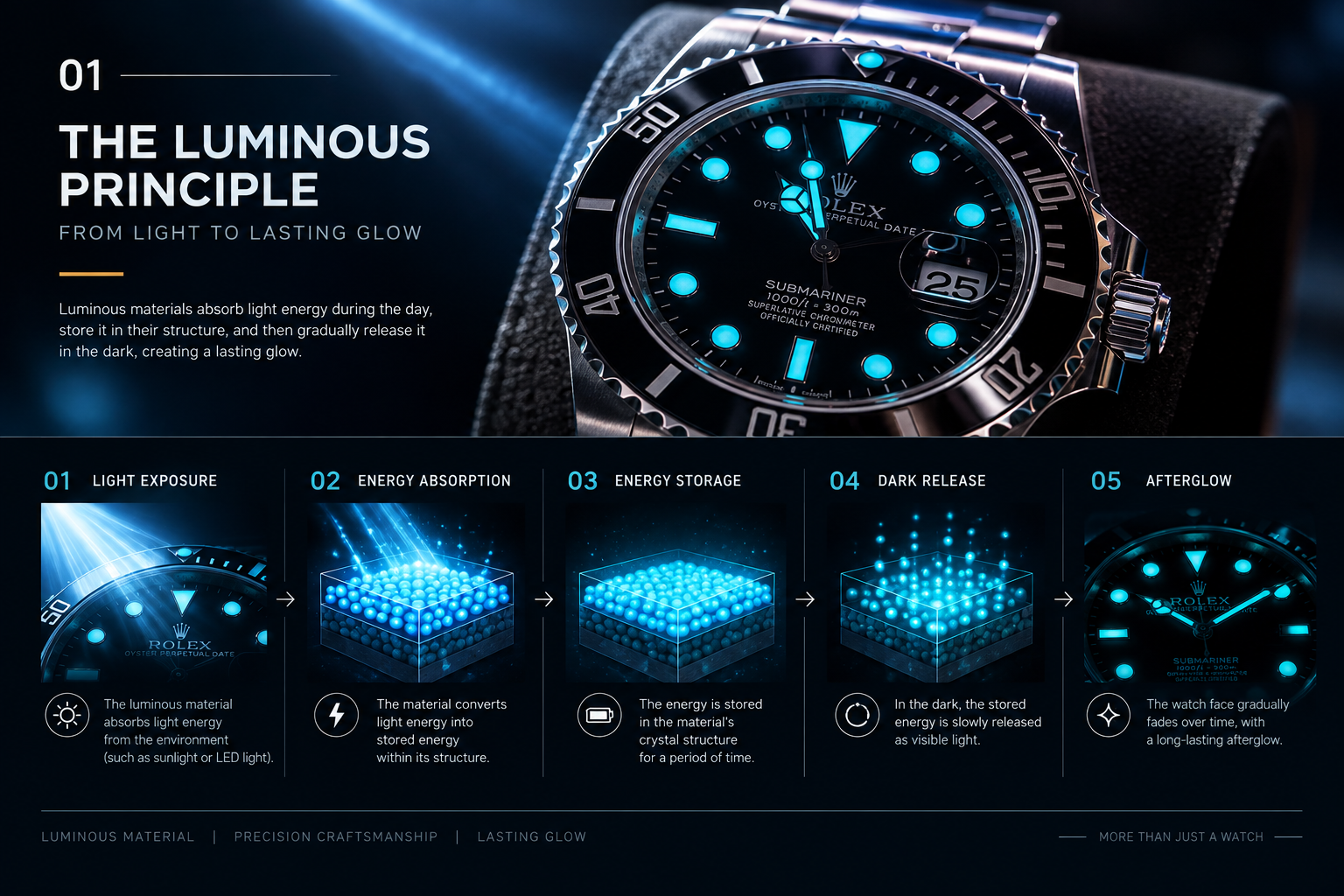
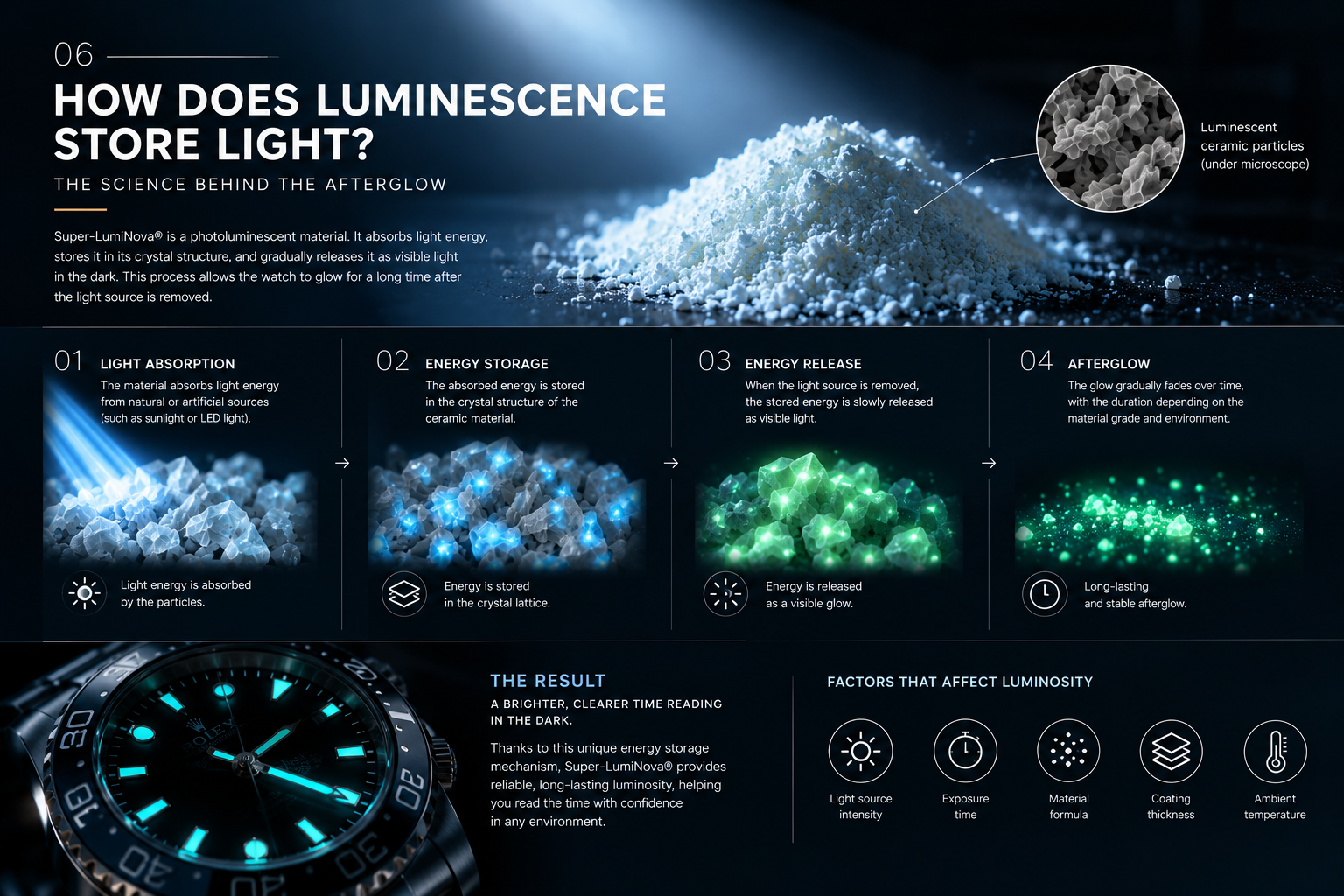
Super-LumiNova is a non-radioactive ceramic phosphorescent material.The most distinctive feature of this material is that it can absorb light energy from the environment and gradually release the stored energy in the form of visible light after the light source is removed.
Light → Absorb energy → Store energy → Release energy in the dark → Produce afterglow
2. High-temperature sintering: Creating a special structure in the material
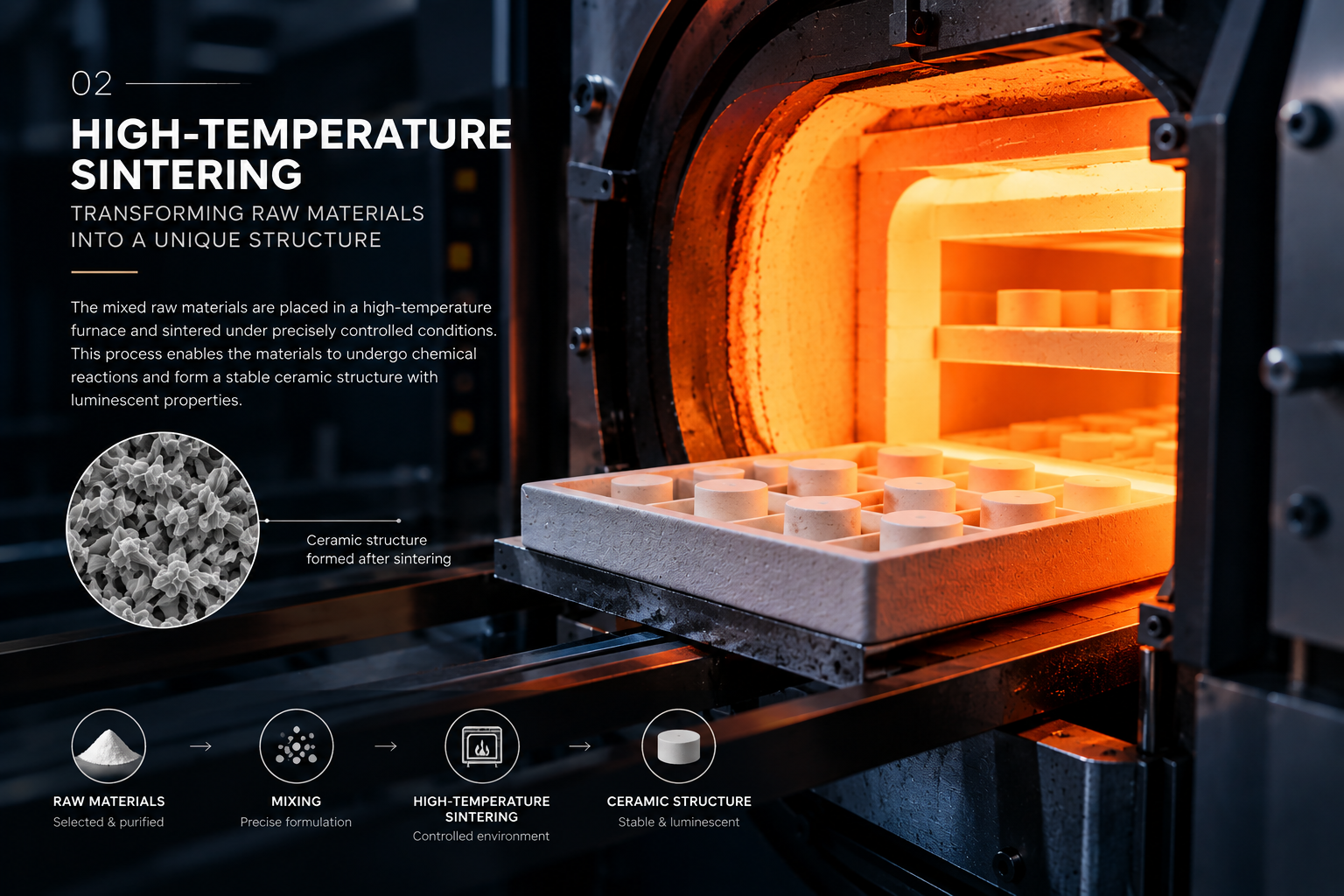
During the material manufacturing process, strict high-temperature treatment is required to transform the raw materials into ceramic materials with specific photoluminescence properties. After the high-temperature sintering is completed, the material will form a hard ceramic-like structure.
The chemical composition, crystal structure, and final luminescent properties of the material need to be established at this stage.Also, precisely because of this, the manufacturing of luminous materials is not a simple "powder processing" process; it is a professional manufacturing process involving material science, chemistry, and precise powder engineering.
3. From ceramic blocks to fine powders
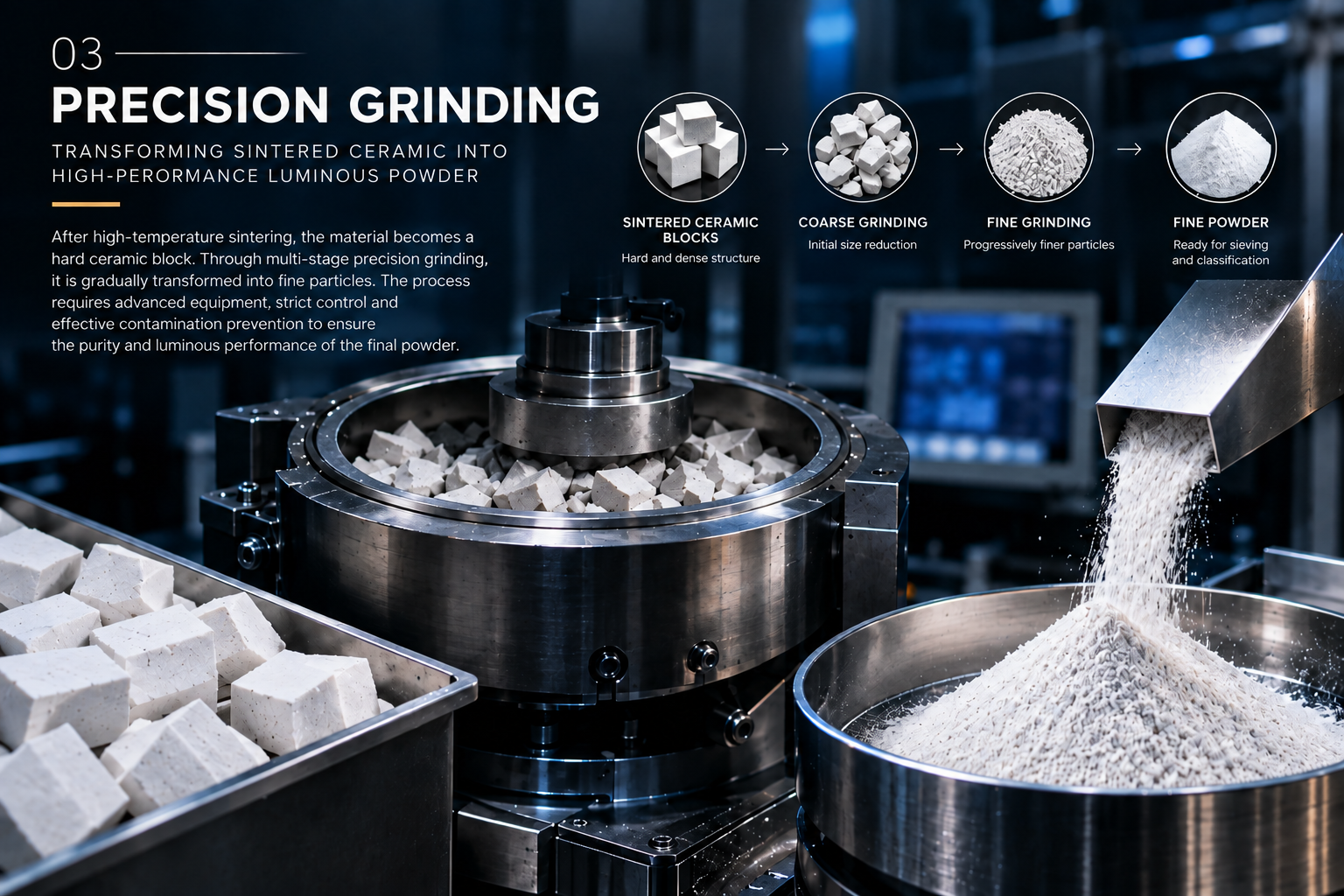
The sintered material cannot be directly applied to the wristwatch.Next, the hard ceramic material needs to be finely processed and gradually transformed into micro-sized particles that meet the requirements.This process has high requirements for equipment, processing methods, and pollution control.
4. Precise sieving: Controlling the size of each particle
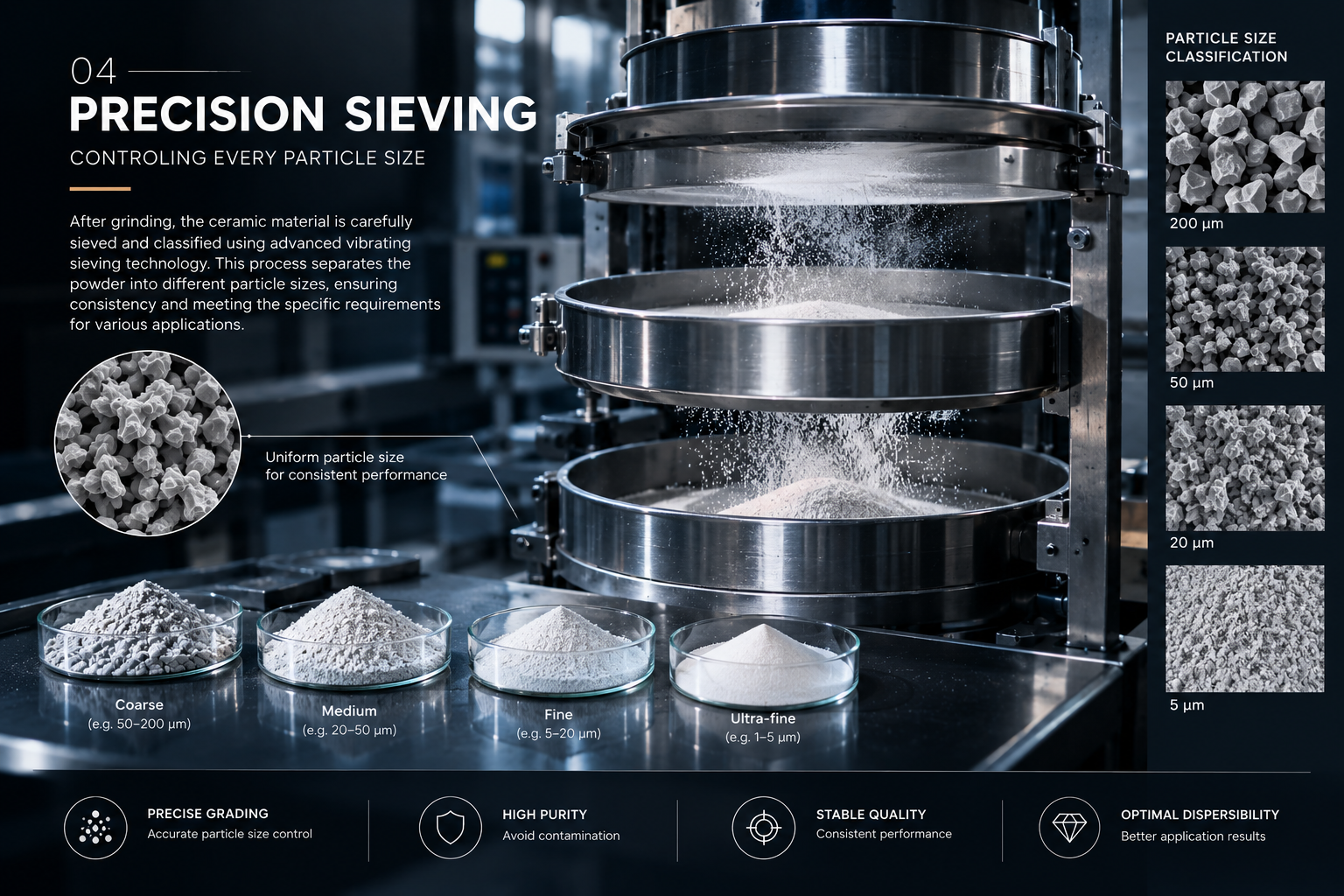
After grinding, particle classification is still required.Through professional screening and particle size control techniques, different-sized particles can be sorted.Because the luminous pigments will eventually be applied to very fine components of the wristwatch.For example:
Time scale, pointer, dial decoration and special three-dimensional luminous structure.
5. Color is not merely "the color seen during the day"
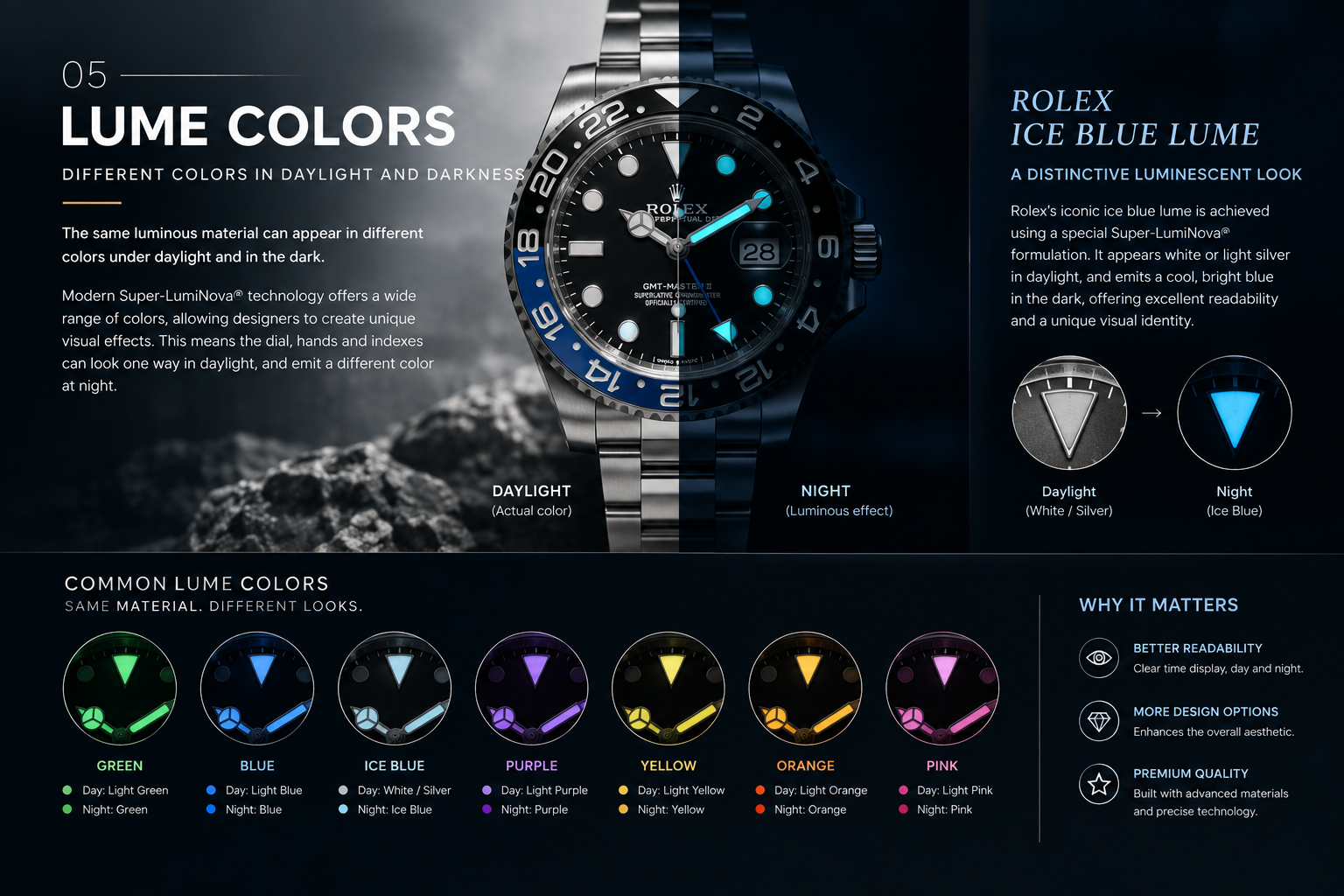
The colors it shows during the day can be different from those it emits in the dark. The Super-LumiNova product is already capable of providing a variety of different base colors and light-emitting colors:
Daytime Appearance Night-time Emission
6. How does phosphorescence "store light"?
Understanding the core principle of Super-LumiNova® can be likened to imagining it as a miniature "light energy cell".When the luminous material is exposed to sunlight, indoor light, or other sources of light, it absorbs light energy.After the light source is turned off, the material does not immediately stop emitting light.Instead, the previously absorbed energy is released at a slower rate gradually.As a result, we can observe continuous afterglow in the dark environment.Therefore:Factors such as the duration of light exposure, the intensity of the light source, the material formula, the pigment grade, the application thickness, and the structural design can all affect the final luminous performance.
7. From luminous pigments to wristwatches: The stage that truly tests craftsmanship
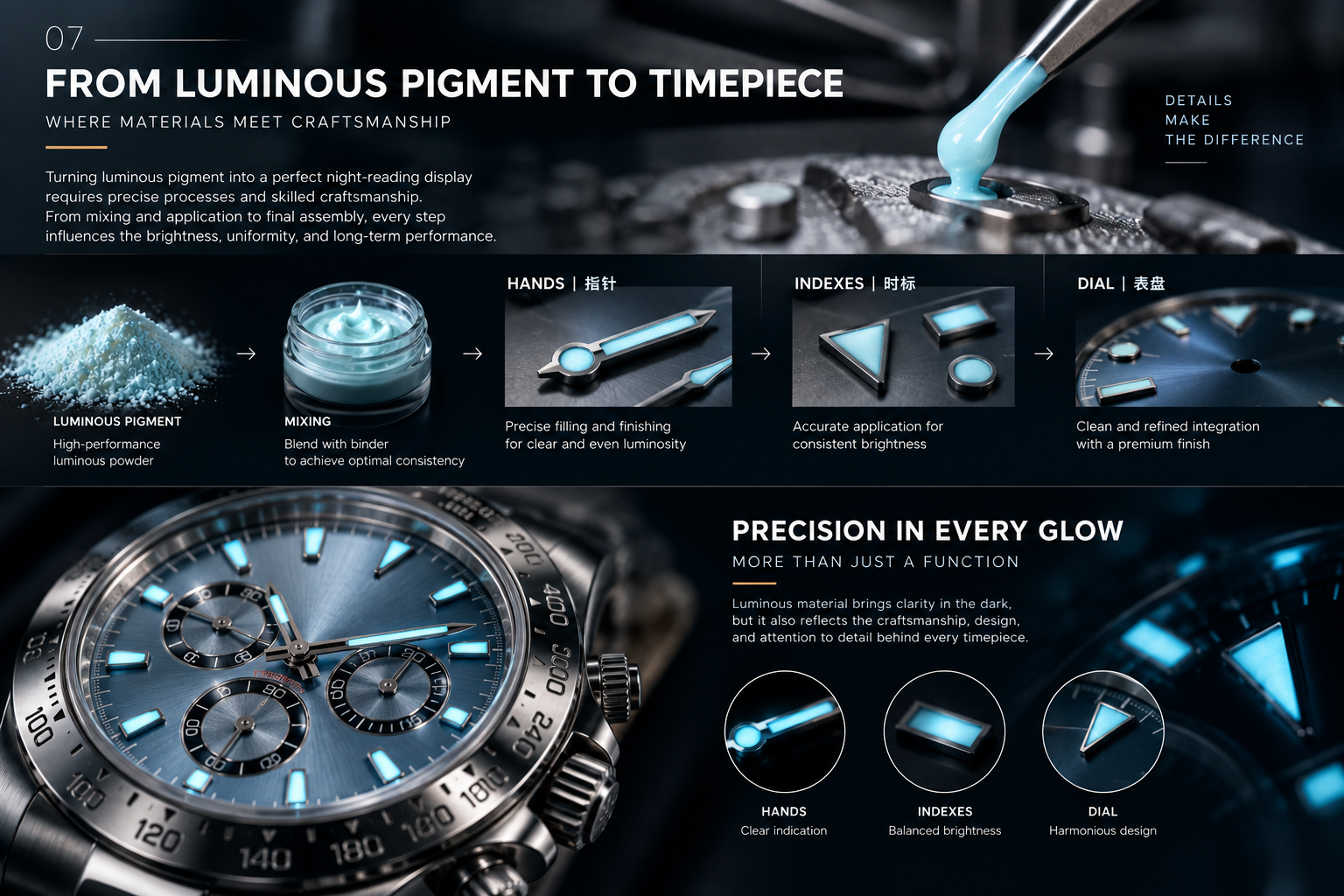
Producing high-quality luminous pigments is just one part of the entire process.To actually apply luminous materials to wristwatches, professional craftsmanship is also required.Depending on the structure of different wristwatches, luminous materials can be applied in different ways:
Hands| Indexes| Dial|
8. The thickness of the luminous layer is also of great importance.
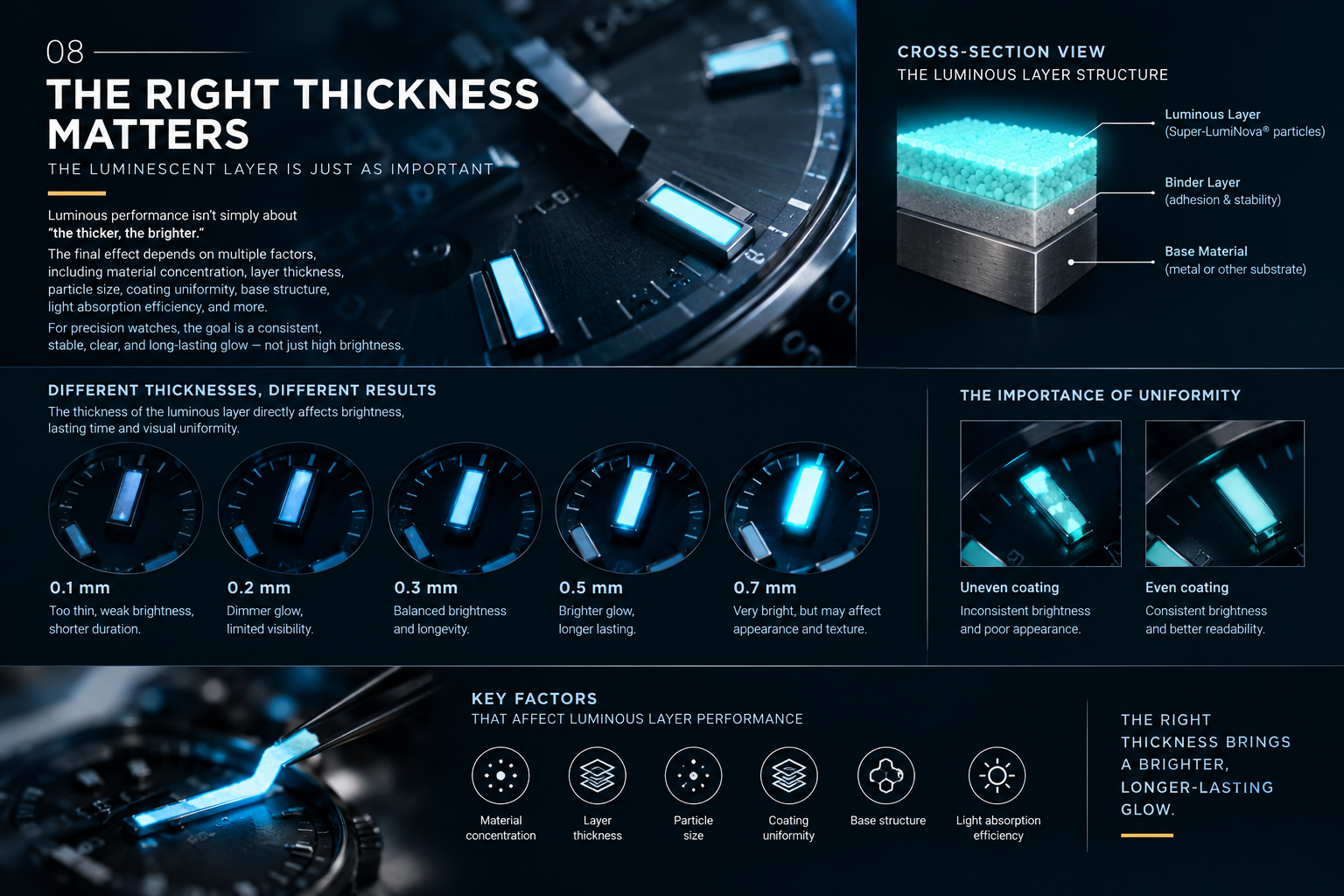
The luminous effect is not simply "the thicker, the brighter".For precision wristwatches, what is more important is to achieve:Uniform, stable and clear luminous effect.Especially between the hour markers and the hands, if the thickness of the luminous layer or the distribution of the material is inconsistent, there may be differences in brightness.Therefore, a truly excellent luminous technique does not merely aim for "brightness", but rather:Uniformity + Durability + Readability + Precision
The Science Behind the Glow: A single luminescent particle is the result of a complete set of sophisticated technologies.
Starting from the raw materials, through high-temperature treatment;From the formation of ceramic materials, to precise grinding;From particle classification to color control;And finally, it is applied to the hands, hour markers, and dial.The luminous effect of a wristwatch may seem like just a beam of light in the darkness, but in reality, it incorporates countless details and craftsmanship!