CRAFTED WITH PASSION BUILT TO LAST
As market expectations for high-end replica timepieces shifted toward absolute structural accuracy and
long-term reliability, established an integrated, specialized supply chain to master the architectural nuances
of luxury sports watches. Operating as our central hub,this overview outlines our core manufacturing philosophy,
engineering pillars,and the rigorous verification protocol designed to ensure non-destructive quality control before logistics routing.
Clean Factory 904L Stainless Steel (Oystersteel) Technical Analysis
In luxury watchmaking, structural metallurgy directly influences case heft, surface brilliance, and long-term chemical resistance. Clean Factory exclusively utilizes genuine 904L low-carbon high-alloy stainless steel (commonly referenced as Oystersteel) across our complete sports reference lineup. This technical document provides a breakdown of the chemical composition, micro-machining tolerances, and surface-polishing standards implemented to match genuine physical benchmarks.
Metallurgical Directory
1.Chemical Composition: 904L Superalloy vs. Standard 316
2. High-Tonnage Stamping & Structural Case Density
3. Ocean Saltwater Acid & Sweat Corrosion Metrics (PREN Rating)
4. Satin-Brushing, Bevel Edge Polishing & Visual Luster
5. Technical Specification Matrix: 904L vs. 316L Steel
1. Chemical Composition: 904L Superalloy vs. Standard 316L
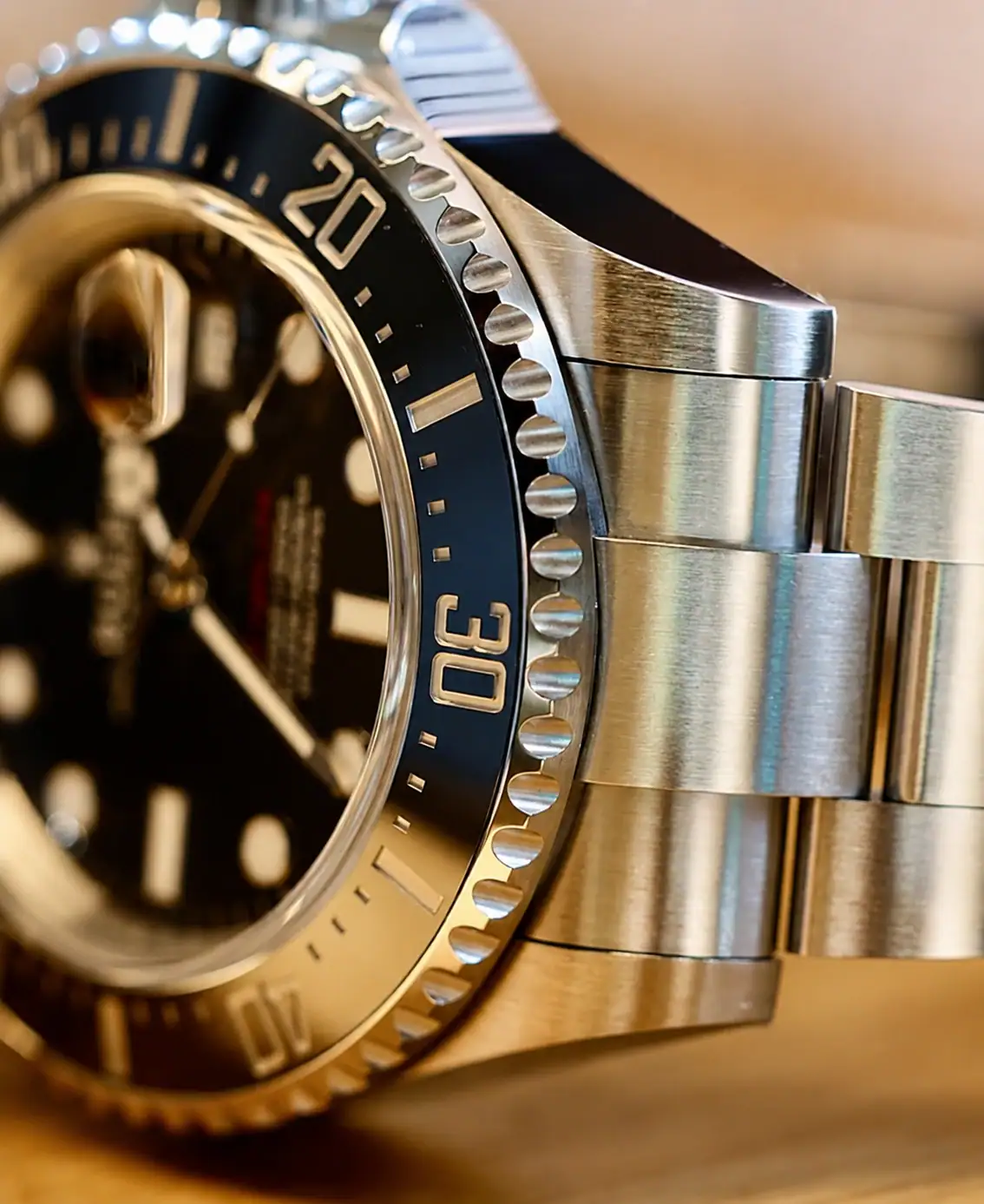
Much of the replica industry frequently defaults to cheaper 316L marine‑grade steel; Clean Factory uses authentic 904L steel blanks instead. 904L is a highly austenitic stainless steel formulated with significantly higher contents of chromium (19‑23 %), nickel (23‑28 %), molybdenum (4‑5 %), plus added copper (1‑2 %). This high‑alloy formulation improves structural hardness and produces a distinctive warm, rich metallic sheen after multi‑stage polishing.
2. High‑Tonnage Stamping & Structural Case Density
Machining 904L steel poses unique manufacturing challenges because of its strong work‑hardening behaviour. Clean Factory employs heavy hydraulic‑press equipment to forge solid raw 904L steel billets into dense watch‑case blanks. This high‑pressure cold‑forming process eliminates microscopic internal voids and delivers a uniform grain structure. When paired with our super‑clone movements and solid sapphire crystals, finished assemblies achieve a gram‑for‑gram weight profile that precisely matches genuine‑watch readings on digital scale testing.
3. Ocean‑Saltwater, Acid & Sweat Corrosion Metrics (PREN Rating)
Conventional stainless steel is prone to micropitting and surface discoloration on case‑back threads and bracelet pin joints when exposed to acidic sweat or seawater. Molybdenum and copper within 904L deliver superior resistance to chloride‑induced attack and localised pitting. In standard Pitting Resistance Equivalent Number (PREN) testing, 904L scores above 34, compared to roughly 25 for conventional 316L steel. This means sports‑watch references — including our custom Submariner‑style collection — stay virtually rust‑free and structurally sound over decades of wear.
4. Satin‑Brushing, Bevel‑Edge Polishing & Visual Luster
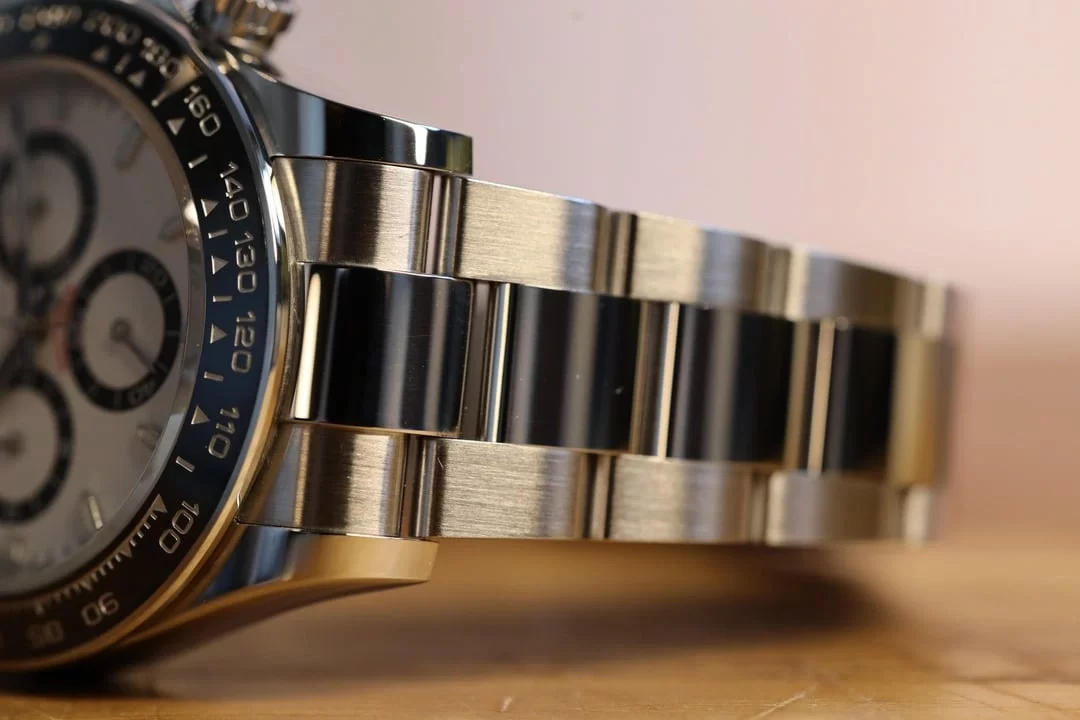
Much of 904L’s aesthetic appeal stems from its reflective properties. Thanks to its unique nickel‑chromium alloy makeup, 904L exhibits a brilliant warm optical reflection that separates high‑end luxury timepieces from ordinary commercial metals. Our technicians apply dual‑finish treatment to every watch case: fine‑grain satin brushing on lug tops and central bracelet‑link surfaces, combined with mirror‑polished chamfered edges along case flanks. On ceramic‑bezel models, the bright reflection of the steel edges transitions smoothly into the ceramic‑insert bezel frame.
5. Technical Specification Matrix: 904L vs. 316L Steel
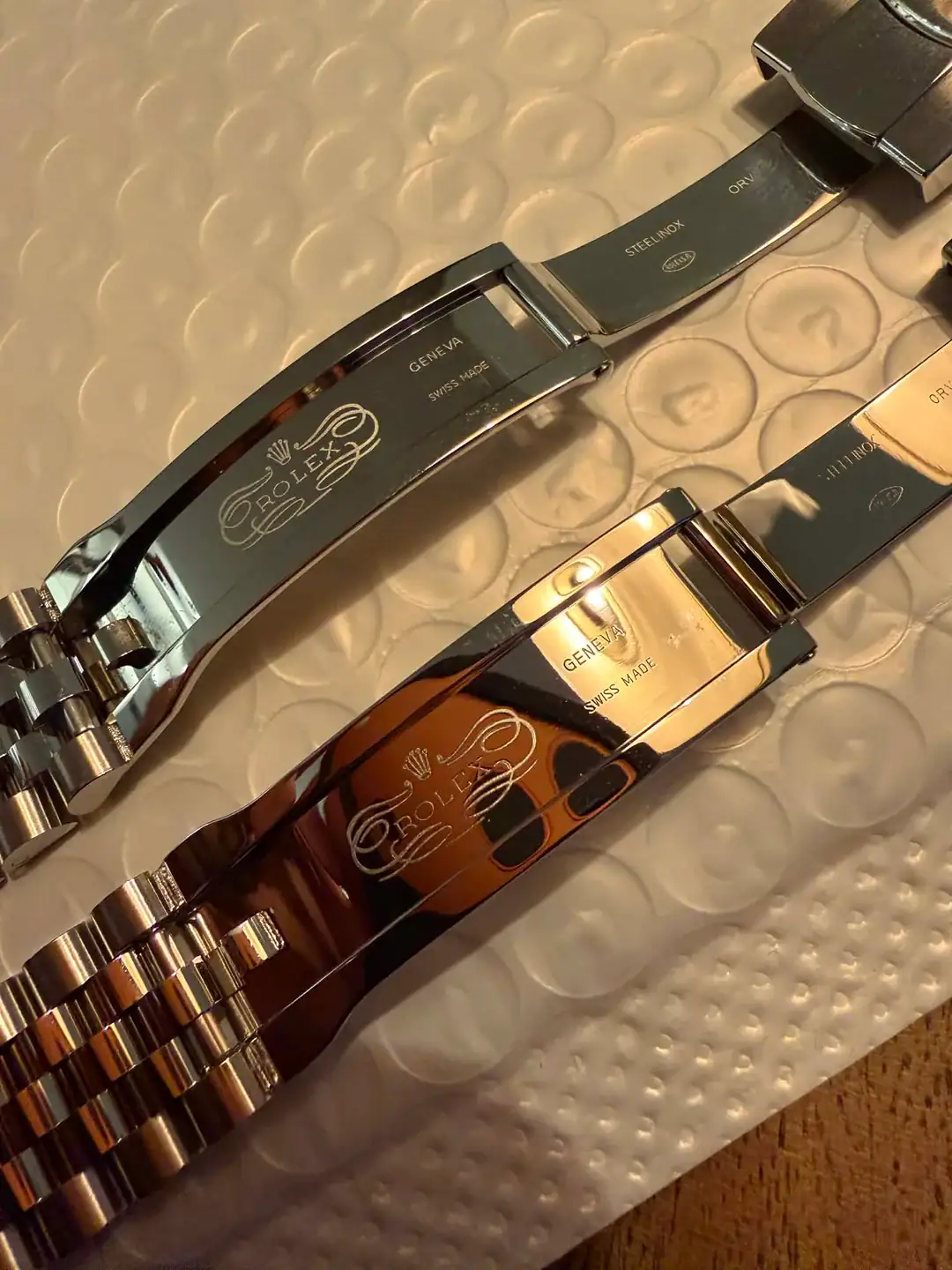
The comparison table below summarises verified metallurgical properties and performance benchmarks for Clean‑Factory 904L steel versus the standard‑market 316L alternative.